
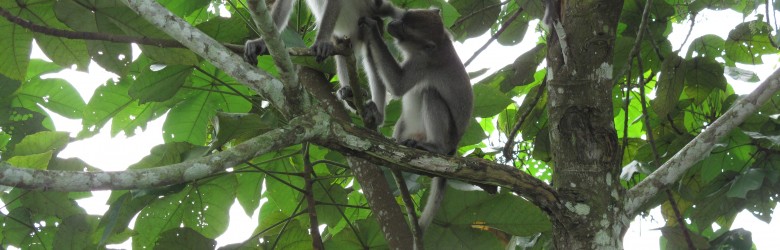
These monkeys host arboviruses as well as the primate malaria species Plasmodium knowlesi which can also infect humans. Key determinants of whether macaques and people share parasites include proximity of human habitation to the forest, the location and feeding preferences of mosquito vectors, and relative susceptibility of the host species. Zoonotic reservoirs like these can play a major role in the evolution and persistence of parasites. And for species of conservation concern, parasites can have an important effect on likelihood of extinction.

S. Reece & S. Stammers
Next Research Exchange deadline is March 15, 2016
We are currently accepting applications to participate in one of our research exchanges. These exchanges present an opportunity for researchers, especially at graduate student and postdoctoral stage, to take a break from their home institutions, travel to a collaborating group at another institution, and work intensively within a group of individuals with complimentary expertise. The exchange is designed to build collaborations among microbiologists, immunologists, epidemiologists and evolutionary biologists, and between empirical and theoretical research groups. Any topic within the RCN-IDEAS remit is fair game. Applications will be considered by a steering committee.
Application deadline: March 15, 2016
Click here to open application form
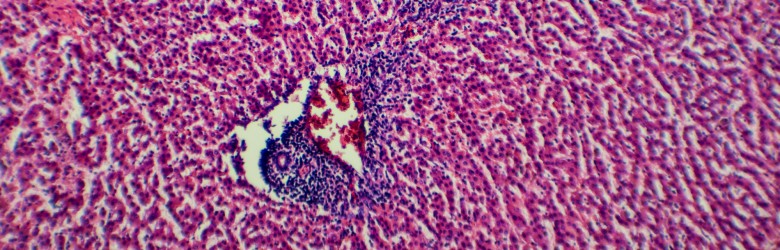
Q. Caudron & R. Garnier
Join us and get involved!
Please CONTACT US if you are interested in becoming a RCN member or if you simply have questions about our program, the parasites and pathogens we study, or our overall mission to promote evolutionary understanding of infectious disease biology.